Ebook Download Manresa: An Edible Reflection, by David Kinch, Christine Muhlke
Checking out Manresa: An Edible Reflection, By David Kinch, Christine Muhlke is an extremely valuable interest and doing that can be undergone whenever. It means that checking out a publication will certainly not restrict your task, will certainly not compel the time to spend over, and also will not invest much cash. It is an extremely economical as well as obtainable point to acquire Manresa: An Edible Reflection, By David Kinch, Christine Muhlke But, with that extremely cheap thing, you can get something new, Manresa: An Edible Reflection, By David Kinch, Christine Muhlke something that you never do and also enter your life.
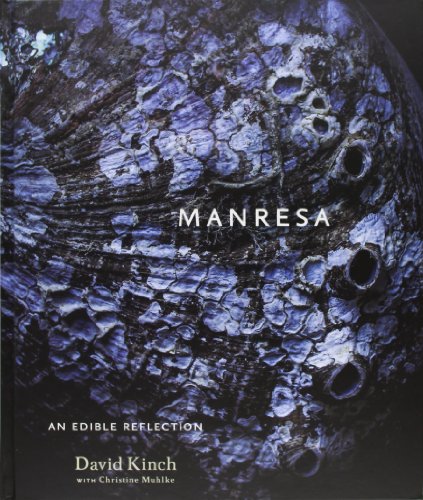
Manresa: An Edible Reflection, by David Kinch, Christine Muhlke

Ebook Download Manresa: An Edible Reflection, by David Kinch, Christine Muhlke
Manresa: An Edible Reflection, By David Kinch, Christine Muhlke. Negotiating with reading habit is no demand. Reviewing Manresa: An Edible Reflection, By David Kinch, Christine Muhlke is not sort of something marketed that you can take or otherwise. It is a thing that will certainly alter your life to life a lot better. It is the thing that will make you several points worldwide and this universe, in the real world and also here after. As what will certainly be given by this Manresa: An Edible Reflection, By David Kinch, Christine Muhlke, how can you negotiate with the many things that has numerous benefits for you?
This book Manresa: An Edible Reflection, By David Kinch, Christine Muhlke offers you far better of life that could produce the high quality of the life better. This Manresa: An Edible Reflection, By David Kinch, Christine Muhlke is what individuals currently require. You are right here and you may be specific and also certain to get this publication Manresa: An Edible Reflection, By David Kinch, Christine Muhlke Never ever doubt to get it also this is simply a book. You can get this book Manresa: An Edible Reflection, By David Kinch, Christine Muhlke as one of your collections. Yet, not the compilation to display in your shelfs. This is a valuable book to be checking out collection.
Just how is to make certain that this Manresa: An Edible Reflection, By David Kinch, Christine Muhlke will not shown in your shelfs? This is a soft documents publication Manresa: An Edible Reflection, By David Kinch, Christine Muhlke, so you could download Manresa: An Edible Reflection, By David Kinch, Christine Muhlke by purchasing to obtain the soft documents. It will alleviate you to read it every time you require. When you really feel careless to move the printed publication from home to office to some area, this soft file will reduce you not to do that. Due to the fact that you can only conserve the information in your computer unit as well as gadget. So, it enables you review it all over you have desire to check out Manresa: An Edible Reflection, By David Kinch, Christine Muhlke
Well, when else will you find this possibility to get this book Manresa: An Edible Reflection, By David Kinch, Christine Muhlke soft data? This is your good chance to be right here and also get this wonderful publication Manresa: An Edible Reflection, By David Kinch, Christine Muhlke Never ever leave this book before downloading this soft file of Manresa: An Edible Reflection, By David Kinch, Christine Muhlke in web link that we supply. Manresa: An Edible Reflection, By David Kinch, Christine Muhlke will actually make a large amount to be your friend in your lonesome. It will be the most effective partner to enhance your company as well as leisure activity.
The long-awaited cookbook by one of the San Francisco Bay Area's star chefs, David Kinch, who has revolutionized restaurant culture with his take on the farm-to-table ethic and focus on the terroir of the Northern California coast.
Since opening Manresa in Los Gatos in 2002, award-winning Chef David Kinch has done more to create a sense of place through his food—specifically where the Santa Cruz Mountains meet the sea—than any other chef on the West Coast. Manresa’s thought-provoking dishes and unconventional pairings draw on techniques both traditional and modern that combine with the heart of the Manresa experience: fruits and vegetables. Through a pioneering collaboration between farm and restaurant, nearby Love Apple Farms supplies nearly all of the restaurant’s exquisite produce year round.
Kinch's interpretation of these ingredients, drawing on his 30 years in restaurants as well as his far-flung and well-fed travels, are at the heart of the Manresa experience. In Manresa, Chef Kinch details his thoughts on building a dish: the creativity, experimentation and emotion that go into developing each plate and daily menu—and how a tasting menu ultimately tells a deeper story. A literary snapshot of the restaurant, from Chef Kinch's inspirations to his techniques, Manresa is an ode to the mountains, fields, and sea; it shares the philosophies and passions of a brilliant chef whose restaurant draws its inspiration globally, while always keeping a profound connection to the people, producers, and bounty of the land that surrounds it.
- Sales Rank: #36076 in Books
- Brand: Brand: Ten Speed Press
- Published on: 2013-10-22
- Released on: 2013-10-22
- Original language: English
- Number of items: 1
- Dimensions: 11.50" h x 1.30" w x 9.80" l, 4.97 pounds
- Binding: Hardcover
- 336 pages
- Used Book in Good Condition
Amazon.com Review
Featured Recipes from Manresa Download the recipe for Fava Bean Risotto Download the recipe for Fig and Wild Fennel Confit Download the recipe for Garden Beignets and Crispy Leaves
Review
“In this age of just-add-water celebrity chefs, David Kinch has never sought the spotlight, but acclaim has rightly found him anyway. This wonderful book is a window into why. Kinch fills its pages with the same qualities that infuse his restaurant, revealing the dedication, creativity, and refreshing humility that underpin everything he does.”
—Thomas Keller, Chef and owner, The French Laundry
“David Kinch’s writing isn’t simply about cooking, rather it’s a life philosophy. Without a doubt, Manresa is one of the greatest restaurants in the world.”
—Ferran Adrià
“I love the sweet craziness of this great roaster and saucier! Vegetable-based cuisine has honed and sharpened his senses, making this big-hearted boy a veritable couturier of vegetable material. David Kinch has the passion of the seasons; he understands that the most beautiful cookbook has been written by nature and has thus entrusted his creativity to what the land and sea provide.”
—Alain Passard, Chef and owner, l’arpège
“Manresa embodies an ideal for all restaurateurs—the natural and delicate expression of its cuisine perfectly reflects David’s personality. Enormous passion can be felt in the aesthetics of his food. There are many chefs in this world, yet David Kinch is one of the few who is trying to open a new gate. This book contains the key.”
—Yoshihiro Murata, Chef and owner, Kikunoi Honten, Kikunoi Akasaka, and Kikunoi Roan
About the Author
DAVID KINCH’s distinctive style of American cooking has placed him on the world culinary map and assured his legacy in the advancement of California cuisine. He was named Best Chef: Pacific by the James Beard Foundation and Chef of the Year by GQ, and his restaurant, Manresa, holds two Michelin stars. He lives in Northern California.
CHRISTINE MUHLKE is the executive editor of Bon Appétit and the author of On the Line: Inside the World of Le Bernardin with Eric Ripert. A former food editor and columnist for the New York Times Magazine, her writing has appeared in Vogue, Vanity Fair, Food + Wine and other publications.
Most helpful customer reviews
35 of 36 people found the following review helpful.
I really wanted to love this book but…
By Frank LaManna
I pre-ordered this book based on many things I had heard about Manressa, the restaurant. It was my kind of book. It had an admired chef, a restaurant that was drawing people to its obscure location, and new recipes for me to get my hands into. I waited months, and finally received my copy.
Manressa: an Edible Reflection, falls somewhere between The French
Laundry Cookbook and Grant Achez’s Alinea cookbook. In the French Laundry Cookbook, Thomas Keller’s goal is clean tastes; In Alinea, Achetz goes for a total sensory experience. David Kinch, of Manressa, focuses on terrior, or “sense of place.”
Keller aims at three bites per portion, Achetz (often) at one. Kinch at two.
Right there, that should tell the reader what he or she is getting into. This is not a book about casual food, nor even “fine food.” This is a book for someone who is very serious, and who appreciates and wants to experience what a driven chef has to offer. Manresssa (the book and the restaurant) is about tweezers-arranged preparations and attention, attention, attention, to detail.
I found the book to be almost all of what I wanted it to be. Manressa: an Edible Reflection is an intense book. David Kinch found his epiphanic moment when he connected with Love Apple Farm, and built on that experience, taking the well worn California mantra, “buy the best available product and cook in season,” and elevating it to new levels to try to create a “sense of place” for his restaurant. Love Apple farm is not simply a purveyor, it is an interactive player where Kinch not only purchases the produce, but indicates what he wants planted. Vegetables seldom, if ever, see refrigeration. Fresh means exactly that. The same is true of his other purveyors. Their bounty powers his menu. His relationship with them is extraordinary. Although he doesn’t forage like René Redzepi, (well, not all the time) he does devote considerable energy to making vegetables sing, and puts the proteins in a different relation to the presentation than what is commonly done.
The book is full of beautiful pictures and David Kinch’s text is interesting to read, at once philosophical and technical, and there is enough of his writing that the book is worth it for that alone. He is pragmatic enough to make use of any techniques and equipment that will bring him closer to producing what he feels will give the reader a sense place, of what is Manressa. He explains everything, from the butter which they make in house from locally sourced dairy products to things like infusing with peach leaves to add another dimension to an offering.
So why a four and not a five?
My problem with this book comes in relation to the recipes. I expected them to contain hard to find ingredients; locating places to purchase them is part of the fun of cooking at this level, and there is a list of purveyors provided. My problem is that none of the recipes have been tested or adapted to the home kitchen; all are exactly as they do them in the restaurant. Of course, it is Chef Kinch’s prerogative to do so, but in doing so, Chef Kinch has created a small but noticeable distance between himself and the reader like myself who wishes to use the recipes, that seems to belie his desire to “share” Manressa. Even if I obtain everything needed, will I be able to cook them in my kitchen?
If the reader turns to the “How to use this book,” section, he or she is exhorted to try more ambitious recipes, but “ambition” sometimes translates into “equipment.” The difficulties of a number of the well-spelled out recipes often have less to do with ambitiously following steps or even obtaining materials, and more to do with having a combi-oven (one that introduces steam…you can buy a .6 cubic foot countertop one for only $300 that will just about hold a small chicken).
This means, for example, that his interesting method of roasting, as time consuming as it is, probably would not work with my oven.
I have cooked recipes from enough high end restaurants to know that chefs at this end of the spectrum have access to high end equipment. Many of them, however, when writing a book for mass distribution, take that situation into account and offer alternatives or home testing. (Thomas Keller in Bouchon Bakery offers, for example, a tested chain-rock-super soaker squirt gun method to put steam into a home oven for baking bread.) Those things are missing in Manressa. While some alternatives are offered, essentially, the reader is told that if you don’t have the high tech equipment (and sometimes the “low tech” equipment that he uses for making butter), then, for many of the recipes, well…you are on your own.
Readers who have purchased, or are considering purchasing the book for other reasons, or who own super high-tech equipment, may, understandably, see things differently. For me, although I can understand all of the reasons why the recipes were not adapted for, or tested in, the home kitchen and could even find myself defending those reasons, still, the distance was a little disappointing. Testing in a home kitchen would have, for me, put this book over the top.
There are also some other admittedly nit-picking items. A small item was the de rigor use well worn mantra of getting the best materials, and treating them respectfully. Use them in season and buy locally, unless you are speaking about truffles, foi gras, and caviar (maybe lobster, too?). I have heard it over many years, and have come to question it. Shouldn’t one of the responsibilities of a chef be to locate and bring forth the potential in the bounty he or she is offered? Should there be no fried green tomatoes because they are not perfectly ripe, or tomato water from over ripe tomatoes?
Another item just proved annoying. The book ended with an abstract and somewhat gratuitous stream of consciousness epilogue which appeared to try to capture the essence of David Kinch. In it there was a line about David Kinch seldom using “I.” I found “I” many, many times in the book, and it should be so. This is, after all, his book, and his dream, so why present him as something that he isn’t?
I like the book, and I am fascinated by the author. I thumb through it often. I think that most people interested in restaurants at this level will find it an excellent read. Being stubborn, I may try, with the equipment I have, to approximate some of the more difficult ones anyway, and see what happens. Maybe converting things on my own is David Kinch’s challenge to readers like me
Amazon does not allow for fractions, or I would have scored it at 4.5. I like the book, but like the person one almost married, I find myself not loving it as I thought I would.
3 of 3 people found the following review helpful.
At Manresa, David Kinch is a Quiet Arbiter of Vegetable Focused Cuisine.
By Forrest Parker
"We kind of tie in our very being to the work that we do. ..Part of finding this balance is knowing when, when to leave."
David Kinch, Manresa. From "Mind of a Chef."
How can I begin to be objective about David Kinch, and about his restaurant Manresa? I came to know Manresa following the trail of Jeremy Fox after he left Charleston for the West Coast. I think the vegetable focused, micro seasonal approach of Manresa, along with its unique relationship with Love Apple Farms, played a pivotal role for Fox as he developed his own voice. A voice that would eventually earn him a Michelin star at Ubuntu, a vegetarian restaurant above a yoga studio in Napa. But I digress...
Manresa's cuisine is not only beautiful, but thoughtful. Every component is there because it needs to be there, period. Consider his dish "Into the Vegetable Garden." It's been on the menu for several years, but continues to evolve on a daily basis depending upon what walks in the kitchen door from Love Apple Farms. It was inspired by Michelle Bras' "Gargouillou," a composed salad dish that includes 50-60 components. (A dish that's also been interpreted by the likes of Grant Achatz, Paul Virant and Daniel Patterson FYI.)
I greatly admire David Kinch from afar. His cuisine reflects time and place. He is transparent about his sourcing, inspiration and technique. He continues to lead, teach and inspire. After a fire very nearly claimed Manresa in 2014, David took the rebuild time to plan a bakery that these days is now crushing it. This year, the culinary community eagerly looks forward to his opening of The Bywater, a casual, New Orleans themed eatery with David Morgan, a chef from John Besh's Restaurant August in NOLA. Kinch grew up in New Orleans, and counts 2 years spent at Commander's Palace among the first of his jobs at 16, so in a way, The Bywater marks a return to his past. I know it will be delicious.
By now you see what I mean- it's hard to be objective about David Kinch and his restaurant Manresa. In my estimation, the Manresa cookbook is one of a handful of essential reads / purchases of the past 5 years.
18 of 19 people found the following review helpful.
Wonderful culinary work
By BCornell
This is a cookbook in name, only. It has detailed recipes, but it's more a meditation on food and cooking by a fabulously inventive chef whom embraced the "localvore" philosophy long before it became a trend. One of Kinch's approaches is a 3-ingredient combination, where the last one is the surprise. I appreciated learning how he thinks about preparing a dish, including what to leave out.
The photos are truly fantastic: I've never seen a culinary book that had better. If you one day get the chance to eat at Manresa or to visit Love Apple Farms for the first time, you're in for a profound experience.
Manresa: An Edible Reflection, by David Kinch, Christine Muhlke PDF
Manresa: An Edible Reflection, by David Kinch, Christine Muhlke EPub
Manresa: An Edible Reflection, by David Kinch, Christine Muhlke Doc
Manresa: An Edible Reflection, by David Kinch, Christine Muhlke iBooks
Manresa: An Edible Reflection, by David Kinch, Christine Muhlke rtf
Manresa: An Edible Reflection, by David Kinch, Christine Muhlke Mobipocket
Manresa: An Edible Reflection, by David Kinch, Christine Muhlke Kindle

Tidak ada komentar:
Posting Komentar